Home / A Guide to Creole & Cajun Food
A Guide to Creole & Cajun Food
Gumbo, jambalaya, étouffée, po‑boys and the words you'll hear at our table — explained.
New to New Orleans food? Here is a short field guide to the dishes on our menu, written by the people who cook them — so you can order with confidence and know what you're tasting.
Creole vs. Cajun: what's the difference?
Both cuisines come from Louisiana and both lean on the “holy trinity” of onion, celery and bell pepper, but they grew up in different places.
- Creole is city food. It developed in New Orleans, where French, Spanish, West African, Caribbean, Italian and German cooks and ingredients mixed. Creole dishes often use tomatoes, butter and cream, and were historically cooked in homes with access to a wide pantry. Shrimp Creole, red beans and rice and our tomato‑based crawfish étouffée are Creole at heart.
- Cajun is country food. It comes from the Acadian French settlers of rural south‑west Louisiana, who cooked one‑pot meals from what the bayou offered — smoked sausage, game, rice and dark roux. Cajun cooking is rustic, smoky and usually tomato‑free. Jambalaya cooked brown, blackened seasoning and boudin are Cajun classics.
Blue Orleans serves both, which is why you'll see “Creole & Cajun cuisine” on our sign. Chef Mike grew up with Creole home cooking in New Orleans and adds a contemporary twist of his own.
The dishes, explained
- Gumbo
- Louisiana's signature soup‑stew, built on a slowly browned roux and the holy trinity, then simmered with stock and either seafood or chicken and andouille sausage. It is served over white rice. Our seafood gumbo with shrimp and crabmeat is one of our signature dishes; the chicken and andouille gumbo is the everyday classic. Gumbo can be thickened with okra or with filé (ground sassafras leaves).
- Jambalaya
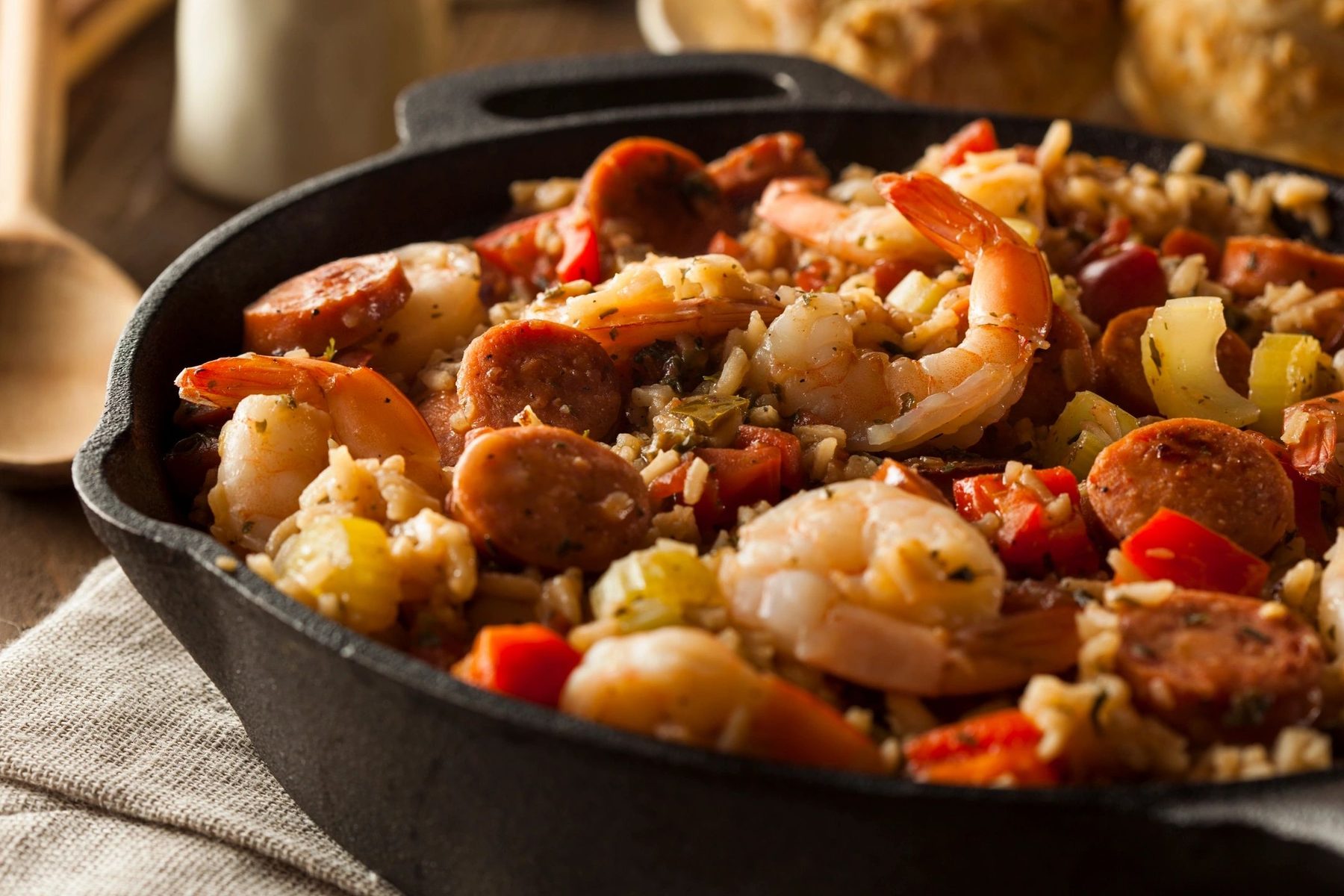
- A rice dish, not a stew — think of it as Louisiana's cousin to paella. Meat, sausage and vegetables are cooked with rice in one pot so the grains absorb all the flavor. Ours pairs chicken and andouille; the “Shrimpalaya” adds grilled shrimp on top.
- Étouffée
- From the French for “smothered.” Crawfish tail meat is smothered in a rich sauce made from roux, the trinity and Cajun spices — Chef Mike's version starts with a Creole tomato roux — and spooned over rice. It's thicker and more concentrated than gumbo.
- Red beans and rice
- The traditional Monday dish of New Orleans, born of wash day when a pot of beans could simmer unattended. Red kidney beans cook for hours with andouille sausage, onion, garlic and spices until creamy, then go over rice.
- Po‑boy
- New Orleans' sandwich, built on crisp French bread. Ours are “dressed” with lettuce, tomato, pickle and remoulade sauce on the side, and filled with fried shrimp, oysters, catfish, alligator or buffalo chicken. The name is said to come from the “poor boys” — striking streetcar workers who were fed free sandwiches in 1929.
- Shrimp and grits
- A Lowcountry dish that Louisiana made its own. At Blue Orleans, grilled Gulf shrimp and andouille sit on pimento and smoked Gouda cheese grits with a cream sauce and applewood bacon.
- Andouille
- A coarse, heavily smoked pork sausage seasoned with garlic and pepper. It shows up throughout the menu — in gumbo, jambalaya, pasta and red beans — and gives Louisiana food much of its smoky depth.
- Remoulade
- The zesty Creole mayonnaise‑and‑mustard sauce served with fried seafood, gator bites and po‑boys. Every kitchen has its own recipe.
- Alligator
- Yes, really. Farm‑raised gator tail meat is lean and mild — many guests compare it to chicken with a hint of seafood. We serve it fried as gator bites with remoulade and in the alligator po‑boy.
- Bread pudding
- New Orleans' favorite dessert, made from day‑old French bread soaked in custard and baked. Chef Mike makes a new flavor every day, so there's always a reason to come back.
- Beignets
- Square French doughnuts, fried and buried in powdered sugar — the pastry that made Café du Monde famous. We serve them by the plate at events and by the dozen for catering.
A few words you'll hear at Blue Orleans
- Who Dat? — the New Orleans Saints chant, and our house theme. Our Who Dat seafood po‑boy piles on fried shrimp and oysters.
- The Big Easy — New Orleans' nickname, for its relaxed pace of life.
- Fleur de lis — the stylized lily on our logo and on the flag of New Orleans, a symbol of the city's French heritage. Our bar is named for it.
- Fat Tuesday — Mardi Gras itself, the last day of feasting before Lent. It has long been a weeknight tradition at our bar.
- Lagniappe — “a little something extra.” In Louisiana it means the small gift a merchant throws in for a good customer.
How to order like a local
- Start with a cup of gumbo or the fried gator bites — both give you the flavor of the kitchen in one bite.
- Can't decide? The Ultimate Dinner for 2, “A Taste of New Orleans” Sampler 5, brings red beans and rice, jambalaya, crawfish étouffée, shrimp and grits, and chicken and andouille gumbo to one table, with bread pudding and a bottle of wine.
- Ask what today's bread pudding is before you order dinner, so you save room.
- Pair the meal with an Abita beer or a house cocktail from the Fleur de Lis Bar.
Book the venue or let us cater
Private parties, corporate luncheons, rehearsal dinners and off‑site catering — all cooked by Chef Mike. Email us with your date, time and group size.